10 Genius Small Kitchen Organization Ideas to Maximize Storage (Easy Fixes That Actually Work)
Picture a typical Sunday evening. You need one saucepan, and reaching it means moving two skillets, a lid that fits nothing, and a colander that never stacks properly. Nothing is broken. The kitchen just isn’t arranged around how you actually cook.
Here’s the encouraging part: most compact kitchens don’t have a space problem. They have a placement problem. The small kitchen organization ideas below focus on giving every item a smarter address instead of hunting for a bigger home to put it in.
Table of Contents
Key Takeaways
- Prime storage sits between knee and shoulder height, so keep daily items there.
- Vertical dividers and tiered shelves add capacity without adding furniture.
- Measure first, buy second. Most storage regrets come from products that almost fit.
- A 15-minute reset habit beats a once-a-year overhaul.
Run the Three-Question Test Before You Buy Anything
It’s tempting to open a browser tab and fill a cart with bins. Hold off for a moment. Pick up each item in the area you’re tackling and ask three things:
- Do I use this at least once a week?
- Does it have an obvious home close to where I use it?
- If not, could it live somewhere less valuable, like a high shelf or a closet outside the kitchen?
Anything that fails all three is taking up room it hasn’t earned. Clearing those items first often solves half the problem before you spend a cent.
Cabinet Fixes for Spaces That Swallow Things : small kitchen organization ideas
1. Build Upward With Tiered Shelving
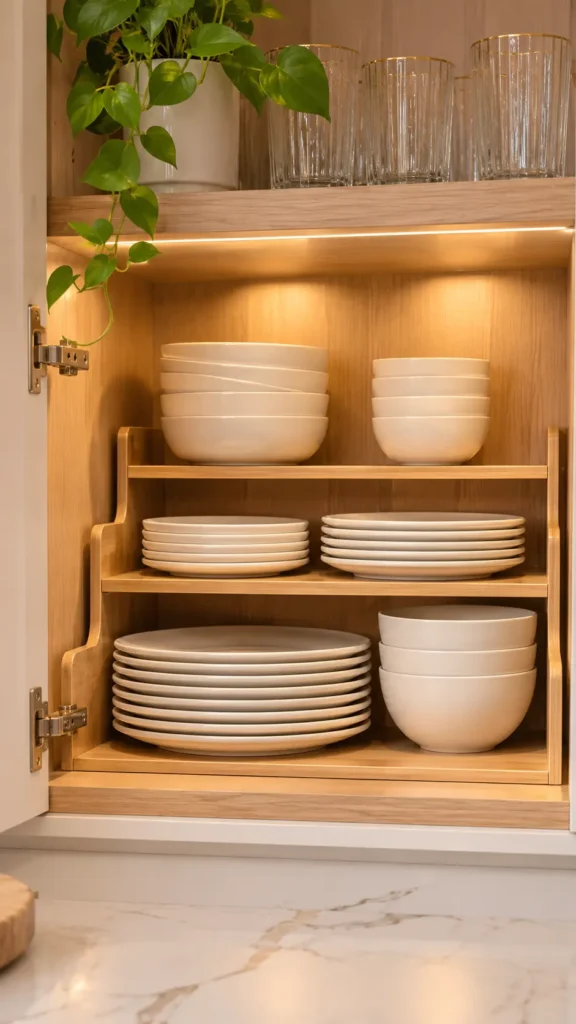
A cabinet shelf with a tall gap above your plates is wasted volume. A tiered stand or stackable shelf turns that gap into a second layer. Bowls go up front on one level, dinner plates on another, and you can lift out what you need without dismantling a tower.
2. File Flat Things Like Documents
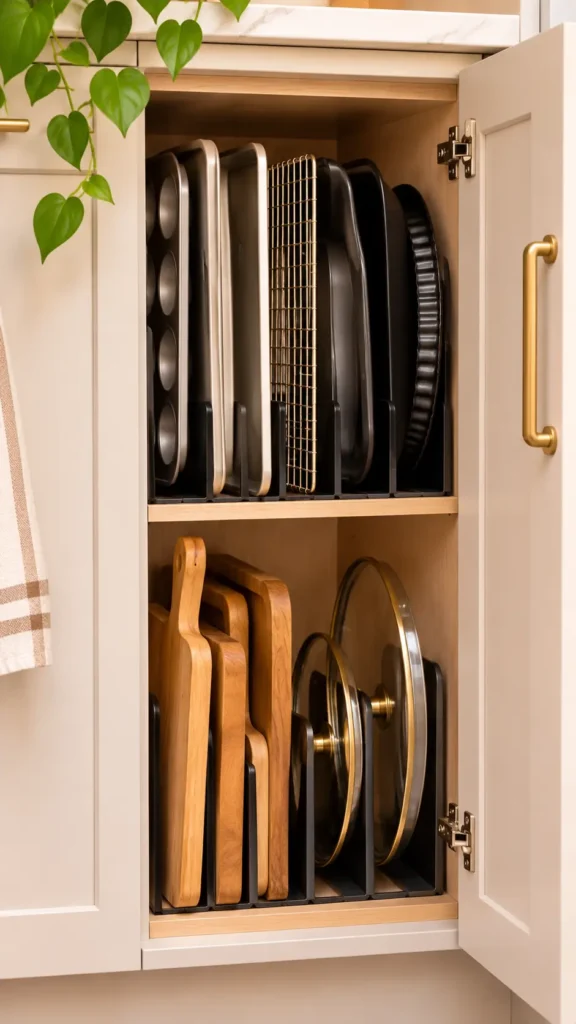
Baking sheets, cutting boards, and pan lids all hate being stacked. Slide them into a vertical divider or a basic desk-style file holder instead. Each piece stands on its own, so grabbing the one you want no longer sets off an avalanche.
3. Claim the Back of the Door
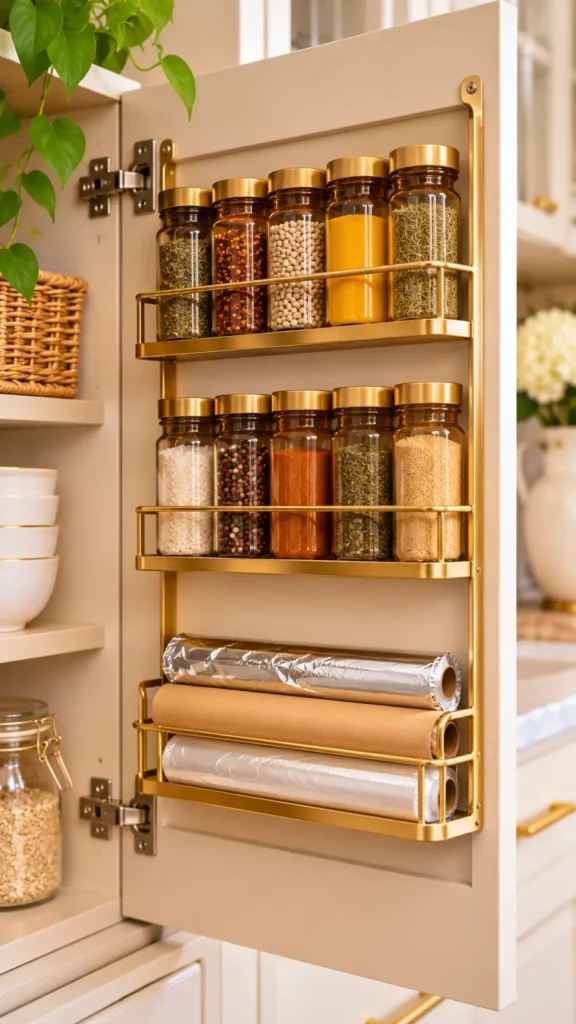
The inside of a cabinet door is free real estate. A narrow rack can hold foil, wraps, spice jars, or cleaning sprays. Test the clearance with the door closed before you commit, because a rack that’s too deep will bump the shelf behind it.
Drawer Fixes for the Utensil Jumble
4. Zone Your Drawers Like a Toolbox
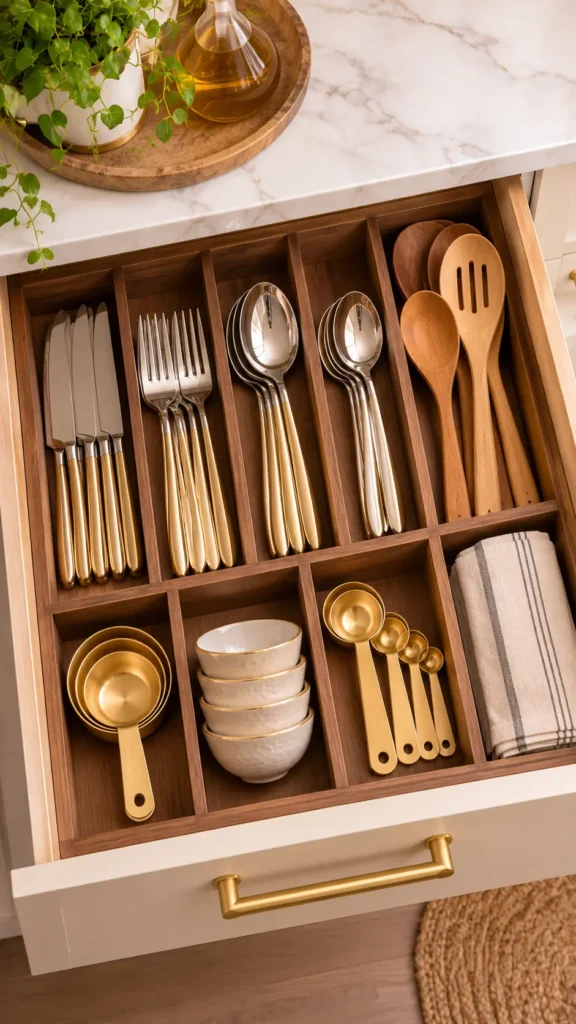
Think of a drawer as a toolbox with compartments. Shallow trays or adjustable dividers let you separate everyday cutlery, cooking tools, and the odd gadgets you only need now and then. Once each category has its own lane, the clutter has nowhere to spread.
5. Lay Spices Flat in a Drawer
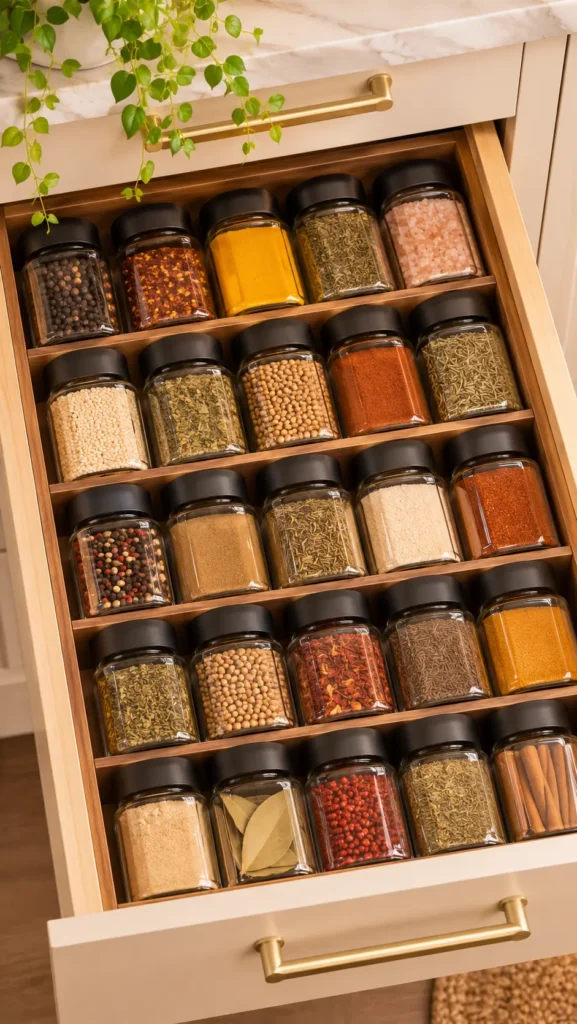
Spice jars lined up on a shelf hide everything behind the front row. Lay them in a shallow drawer with labels on top and you can see the whole collection in one glance. If you don’t have a spare drawer, a small tiered rack inside a cabinet gives a similar view.
Wall and Gap Fixes When Cabinets Run Out
6. Hang What You Reach For Most
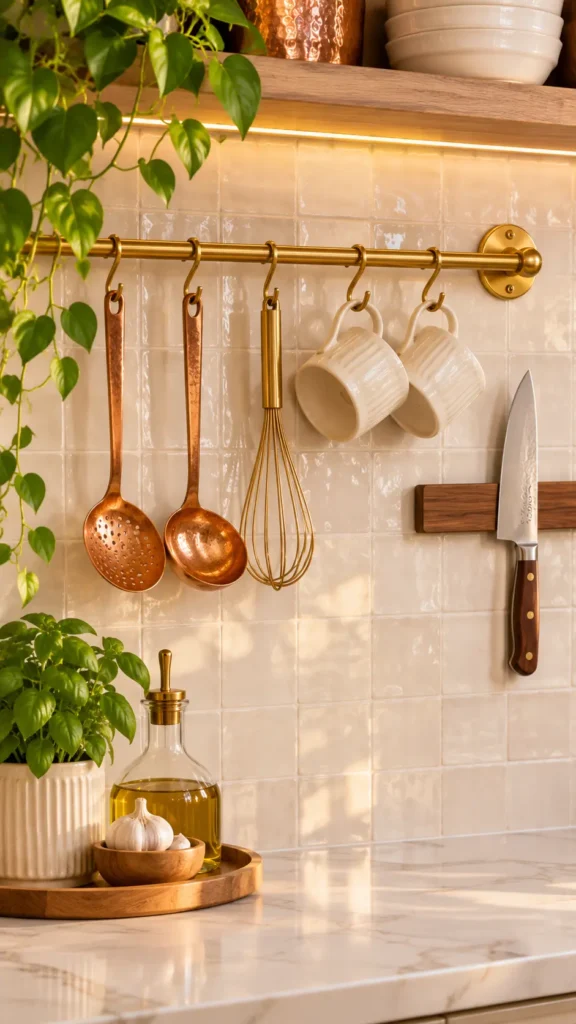
A rail with a few hooks takes ladles, whisks, and mugs off your shelves. A magnetic strip does the same for knives. Keep the display edited, though. A few well-chosen tools look intentional, while a wall full of gear feels cluttered.
7. Slide a Slim Cart Into the Gap
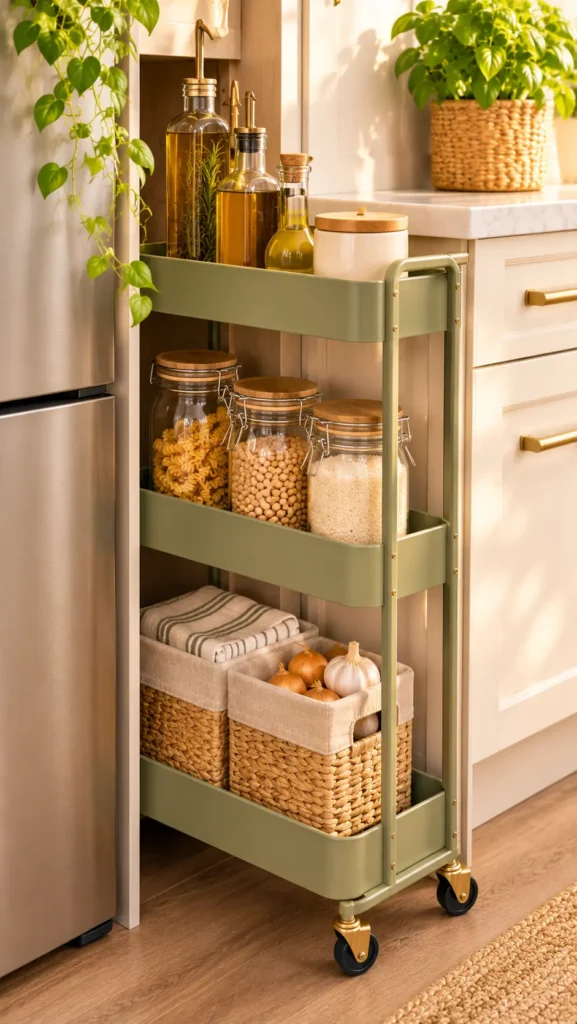
Many kitchens hide a skinny gap beside the fridge or between a cabinet and the wall. A narrow rolling cart, even one only a handful of inches wide, can hold oils, canned goods, or cleaning supplies and roll out when you need it.
Counter and Pantry Fixes That Keep Things Calm
8. Follow the One-Tray Rule
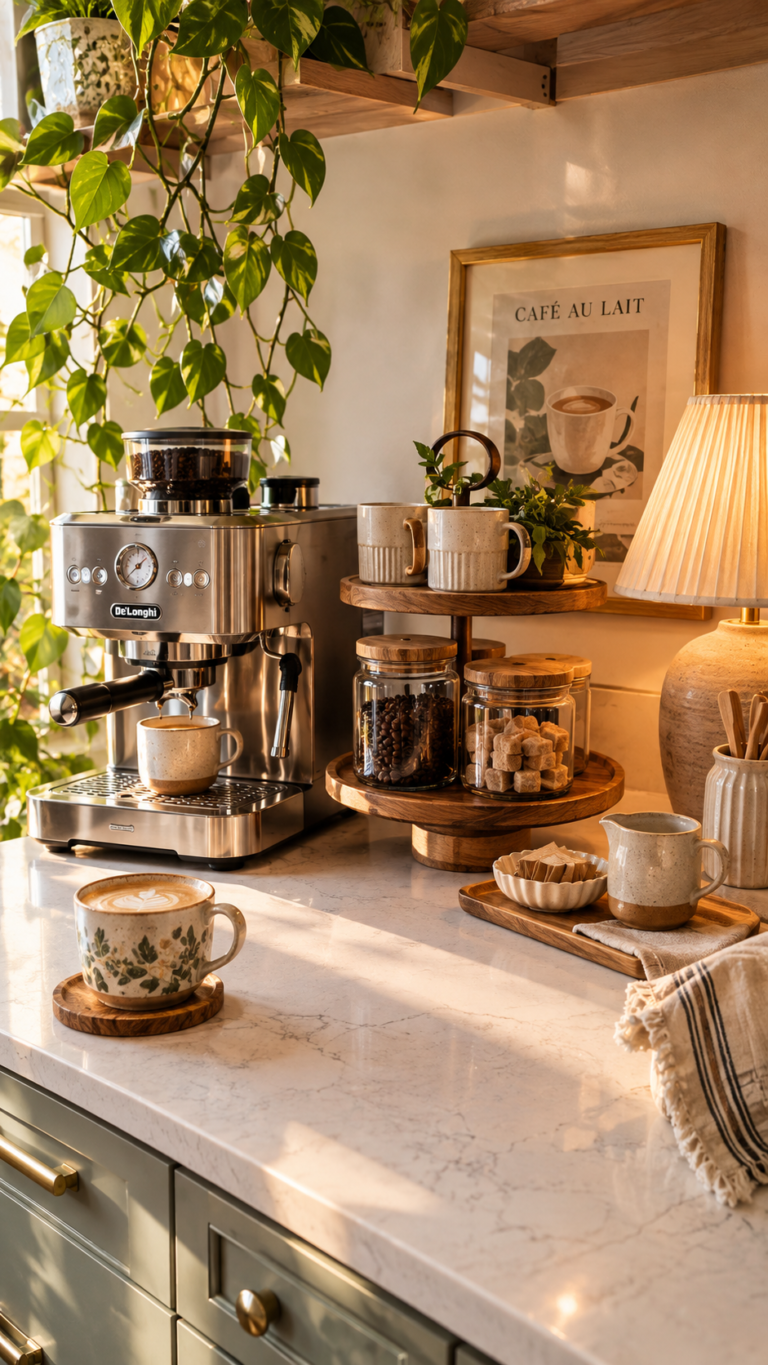
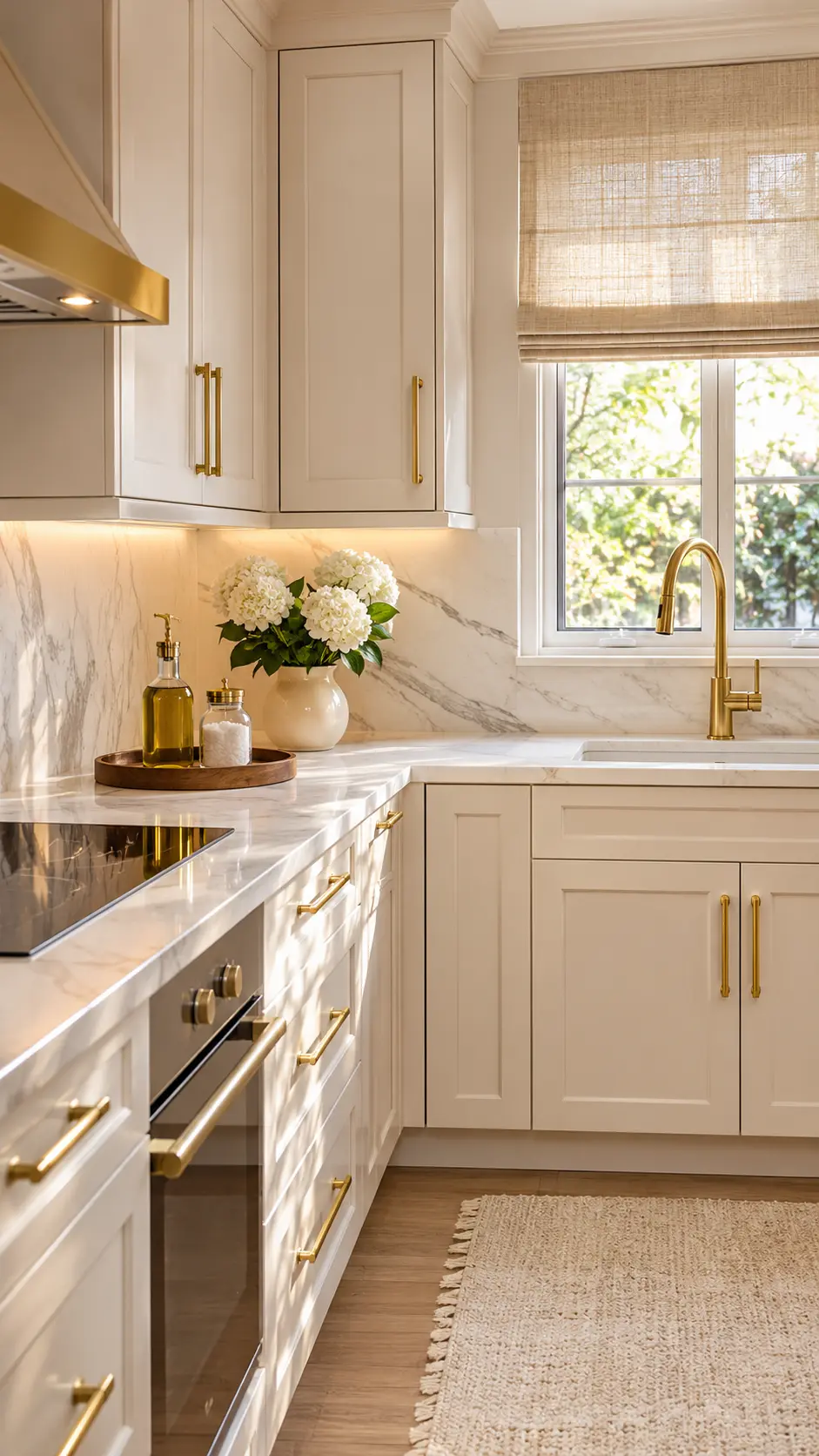
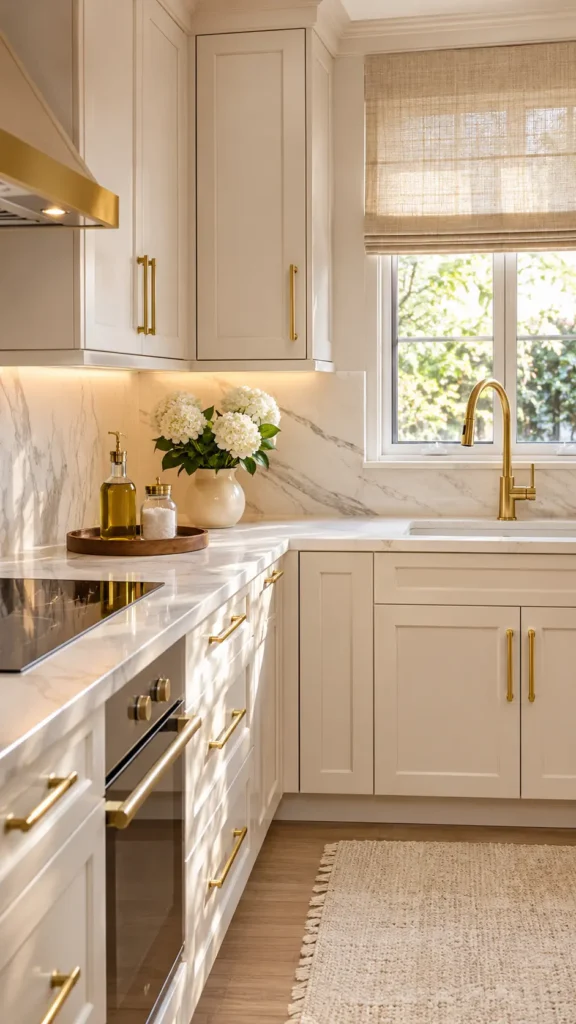
Counter space is what makes cooking possible, so protect it. Corral oil, salt, and pepper on a single tray and keep only true daily-use appliances out. Everything else goes inside. A tray also makes wiping down fast, since you lift one thing instead of six.
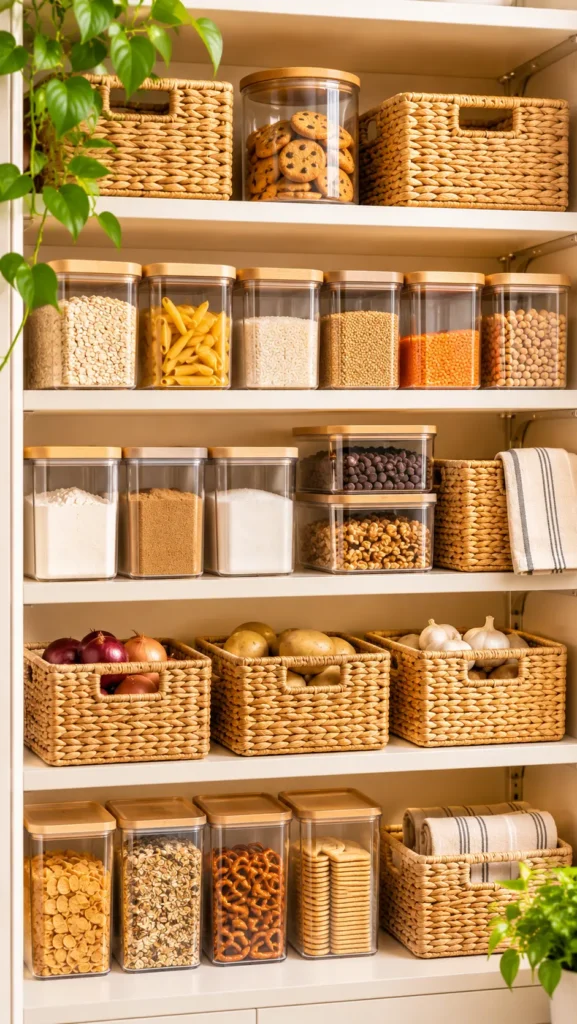
9. Store Food by Meal, Not by Category
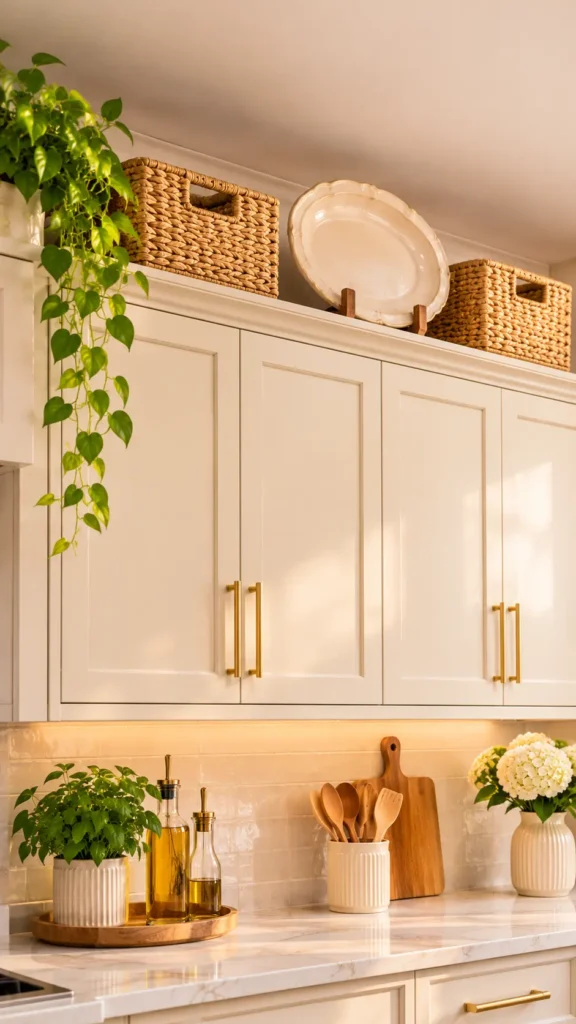
Instead of sorting shelves into cans, boxes, and bags, try a bin for breakfast, a bin for snacks, and a bin for baking. Handled bins slide out in one move, and the whole household learns where things belong without a lecture.
10. Put the Top of the Kitchen to Work
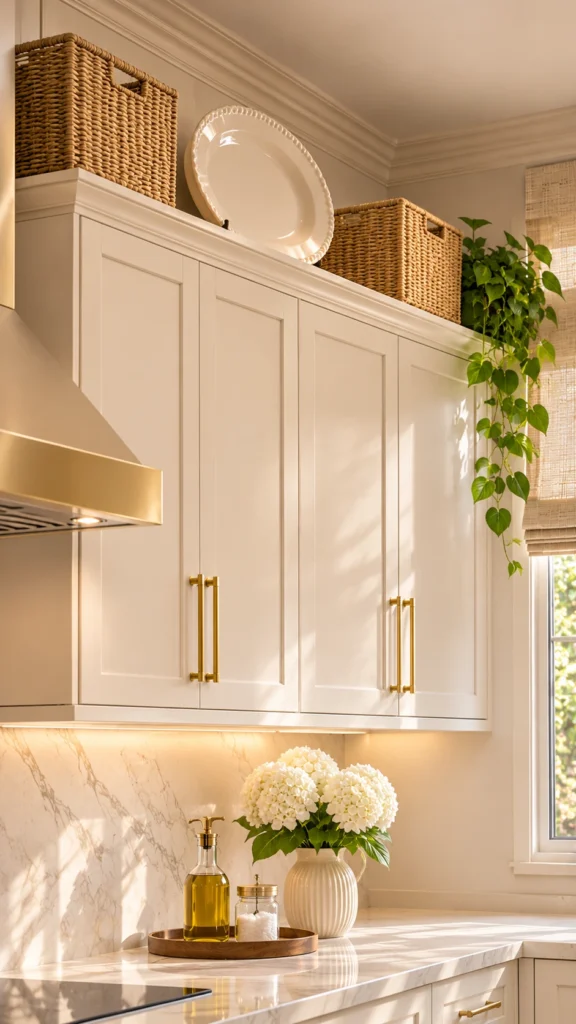
The space above cabinets and the fridge is perfect for things you need a few times a year, like a slow cooker, party platters, or holiday dishware. Matching baskets keep it looking neat, and a quick label tells you what’s inside without taking everything down.
Three Mistakes That Quietly Waste Space
- Organizing before decluttering. Tidy bins full of things you never use still occupy shelves. Edit first, then arrange.
- Buying in bulk without a plan. A warehouse-size pack of paper towels or rice feels thrifty until it takes over a whole cabinet. Decide where the overflow lives before it arrives.
- Ignoring how you move. If the cutting boards live across the room from the counter you chop on, you’ll leave them out. Store tools within one or two steps of where you use them, and the clutter stops migrating.
Spot any of these in your own kitchen? Don’t worry. They’re easy to fix, and noticing them is already half the work.
Buy This, Skip That
- Buy: adjustable dividers, tiered shelves, slim vertical holders, and bins with handles. These adapt as your kitchen changes.
- Skip: big matching sets you haven’t measured for, deep bins that bury items at the bottom, and single-purpose gadgets that add more clutter than convenience.
- Always: measure your shelf height, depth, and door clearance, then write the numbers in your phone before you shop.
Your 15-Minute Starter Plan
You don’t need a free weekend. Try this over a single coffee break:
- Choose one trouble spot, such as the drawer you dread opening.
- Empty it completely and wipe it down.
- Remove anything broken, duplicated, or unused.
- Group what remains by task, and put daily items at the front.
- Note what container or divider would help, then measure before buying.
Repeat with another spot next week. Small, steady wins feel far better than a marathon that leaves everything half finished.
Frequently Asked Questions
What’s the cheapest way to add storage to a small kitchen?
Decluttering costs nothing and frees up more room than most products will. After that, inexpensive tiered shelves, adhesive hooks, and tension rods give you the biggest boost per dollar.
How do I organize a small kitchen without a pantry?
Dedicate one cabinet or a tall shelf to food and use bins sorted by meal. Add a slim cart or an over-the-door rack for overflow, and keep bulk items in airtight containers so they take up less space.
Do I need matching containers for everything?
Not at all. Matching sets look tidy and stack well, but functionality matters more. Start with the items you use most, and add uniform containers over time if you like the look.
How often should I reorganize my kitchen?
A quick reset once a week and a deeper check every few months is plenty. Small kitchens fill up quickly, so regular light maintenance beats occasional big overhauls.
Final Thoughts
A small kitchen isn’t a limitation, it’s a design challenge, and a surprisingly fun one. Once you stop asking “where can I squeeze this in?” and start asking “where does this belong?”, the whole room begins to work with you. Start with one drawer, one shelf, or one corner, and let the results motivate the next step.
Which of these small kitchen organization ideas will you try first? Tell us in the comments, share your own space-saving tricks, and save this post to Pinterest so it’s ready when you are.